Shanghai & Beijing · Travel series
ShanghaiShanghai with International Friends: a local's private list
A local's private list for hosting foreign friends, colleagues and in-laws
Planning a trip? See open dates and reserve a session →
Over the past two years I've hosted the same kind of visit more times than I can count — HQ bosses flying in, British in-laws, foreign friends passing through. Each time the brief is the same: show them Shanghai in a way that feels like Shanghai, not like a textbook. Below is the list I actually use, split by what kind of visitor you've got.
One honest note up front: we also run an immersive game here in Shanghai and Beijing, called AURORA. It earns its place below as the natural evening plan for a visiting group — everything else on this list is a genuine recommendation, not a plug.
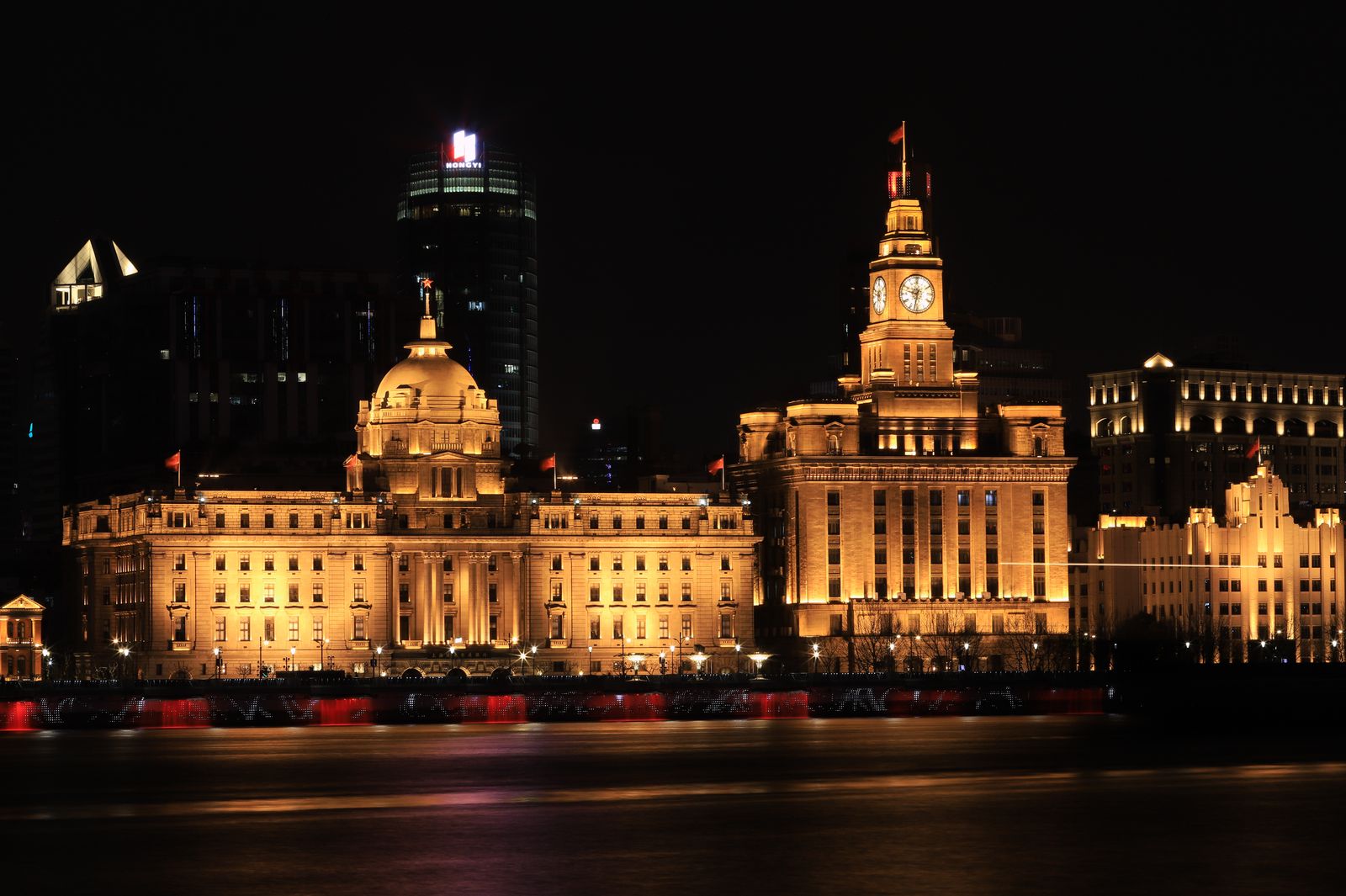
The Bund at blue hour

First-timers: the classics that actually land
For someone's first trip to Shanghai, skip the clever stuff. These are the hits because they genuinely deliver.
Yu Garden (豫园)
Non-negotiable for a first visit. The old town, the teahouses, the bridge-and-koi chaos — it reads as "China" instantly and it's walkable. Go early; by midday it's a crush.
Lost Heaven on the Bund, then a rooftop
Lost Heaven is the easy win for international palates: Yunnan cuisine with clearly marked gluten-free and vegetarian dishes, and service that handles special requests without blinking. After dinner, walk a few minutes to the waterfront. For the skyline, go up to Flair Rooftop on the 52nd floor of the Ritz-Carlton Pudong. If a high-rise bar isn't the mood, the Long Bar at the Waldorf Astoria on the Bund is older, quieter, and better for a business conversation.
Xintiandi & the First CPC Congress site — or Wukang/Anfu + West Bund
Two different walks, pick by crowd. Xintiandi is polished and historic; right beside it is the site of the First CPC National Congress, which has a small, well-presented museum if your guest is into modern history. If you'd rather see how young Shanghai actually lives, walk Wukang Road and Anfu Road — plane trees, old villas, boutiques — and keep going to the West Bund museums by the river.
The places "only foreigners seem to know"
These two are the ones expat friends always ask to repeat. Neither is in the guidebooks.
Yang Peiming Propaganda Poster Art Centre (杨培明宣传画艺术馆)
A private collection of mid-century Chinese propaganda posters, tucked into a residential building in Changning. It's small, intensely curated, and beloved in Shanghai's international community. Check opening hours before you go — it's a private space, not a big museum.
Fun Collection (拾趣新街)
An underground shopping arcade beneath Shanghai Science & Technology Museum station (Line 2). Hundreds of small shops, and — this is the part that surprises visitors — the owners speak English and love a browse. It's a well-kept secret among Shanghai's foreign residents; friends have asked to go back every single trip.
Wukang/Anfu lanes or the arcade

Temples without the tour-bus feel
Both Jing'an Temple and the Jade Buddha Temple are central, but I send people to the Jade Buddha: it's calmer, the vegetarian noodles are genuinely good, and it offers an English-language guide so your guest isn't just guessing at what they're looking at. Quieter mornings are best.
If they want "ancient China," done properly
Palace Banquet (宫宴)
I took my British in-laws here and it was a total success. It's a Han-culture dining theatre: costumed service, a set meal, and — the real draw — a hair-and-makeup transformation where your guest gets dressed in Hanfu before the meal. For visitors with a real interest in imperial Chinese culture and a bit of budget, it's the single most "I can't believe this is happening" evening in the city. Book the makeover slot ahead; it's the part everyone remembers.
Water town or palace setting

A breath of nature, one day out
Shanghai itself is dense; for green, leave the city for a half or full day.
- Panlong Tiandi (蟠龙天地) — a rebuilt water town with international brands mixed into the old streets. Easy, pretty, at least half the visitors are foreigners on any given weekend. A one-day trip, done perfectly.
- Zhujiajiao (朱家角) — the more original, less polished water town if your guest prefers the ungroomed version.
Beyond Shanghai: the deeper day trips
- Suzhou (苏州) — an easy train ride and a perfect one-day out. Go straight to the Humble Administrator's Garden (拙政园) and Pingjiang Road (平江路): classical garden plus a canal street, enough culture without exhaustion.
- Anji JW Marriott (安吉JW万豪) — if you have more time and want to show a different China, Anji is genuinely beautiful and the hotel handles international guests well. It sits next to the China Bamboo Expo Garden, which has a panda house — yes, you can see giant pandas there.
Water town canal or bamboo

What to eat (the short list)
- Lost Heaven — Yunnan, the safe-but-excellent crowd-pleaser.
- Yi Zuo Yi Wang (一座一忘) — relaxed Yunnan spot, good for a low-key night.
- Peking-duck houses — Siji Minfu (四季民福) and Xiao Da Dong (小大董) both have Shanghai branches; reliable for a group that wants the duck experience.
- Yuangu (元古) — Chinese tea and delicate desserts, a calm, pretty room.
- Meigui Ting (玫瑰厅) — Shanghainese cuisine, the local answer to "show me Shanghai food."
- O'mills — bakery and brunch, the easy morning or coffee stop.
- Vegan — spots like Rú · Pure Vegan (茹·pure vegan) if your guest eats plant-based; Shanghai does this well.
Food / a restaurant table

One thing here that needs no translation: Our own game, AURORA, runs in Shanghai and Beijing, in full English or full Chinese. It is cinematic, step-inside entertainment — a sword, a sleeping dragon, and a seal that is yours to break — and non-horror: no jump scares, no actor grabs you. Sessions run through the day, so it slots in around temples and rooftop bars instead of costing you an evening.
Practical notes
- Set up Alipay before they land. Link an international card at home; cash is now the awkward option.
- Google Maps is unreliable here. Use Apple Maps or Amap (with an English setting), and screenshot directions on Wi-Fi.
- Book the evening things ahead. AURORA sessions, Palace Banquet makeovers and popular restaurants sell out — galleries and coffee don't.
- English is workable in central districts and thin elsewhere; a translation app covers the rest.
- Didi is the local ride app and beats hailing on the street.
Back to the series: For the wider picture — Beijing too, plus escape games, art districts, coffee streets and nightlife — read the companion guide.
Frequently asked
How many days do you need in Shanghai?
Three full days covers the classics — Yu Garden, the Bund, one long walk through the old lanes, and one evening out. Five days lets you add Suzhou or a water town without rushing anything.
Do you need to speak Chinese to get around Shanghai?
Not in the centre. Central districts run on English signs, Alipay and Didi both take an international card, and hotel staff switch easily. Outside the centre it thins out fast, so keep a translation app on your phone.
What is there to do in Shanghai in the evening?
A rooftop bar over the Bund, the river cruise, a Hanfu dinner theatre like Palace Banquet — or a game. We run AURORA in both Shanghai and Beijing, played in full English or full Chinese. Each session is held in one language, so a mixed group just picks the one they all share.
Is AURORA an escape room, and is it scary?
It is an immersive escape room: you move through real rooms and solve your way through a story rather than sitting in one. It is non-horror — no jump scares, no actor grabs you, no face-to-face intimidation. A few scenes use low lighting for atmosphere.
Can you play AURORA in English?
Yes. Sessions run in full English or full Chinese, and whichever language you choose carries through the whole performance. It runs in both Shanghai and Beijing, and sessions run right through the day, so it fits around your other plans.
Keep reading
- Beijing for first-timers: what the city itself tells you to prepare
- A beginner's guide to Shanghai, in plain order
Want something new you can fit into a spare slot in your day? We are Mr. & Mrs. Jawn, and we build immersive escape theatre in Shanghai and Beijing. AURORA — Chapter One is cinematic, step-inside entertainment: a sword, a sleeping dragon, and a seal that is yours to break — your own party inside a live story, in full English or full Chinese, no horror, no jump scares. Sessions run 115 minutes.
Think of it as the trend-forward way to meet today’s China up close — the side the guidebooks never reach. Two Hearts, One Lock — AURORA Date Night.