Shanghai & Beijing · Updated
Things to do in China beyond the Great Wall
Most China itineraries read the same way: the Great Wall, the Forbidden City, the Terracotta Army, a classical garden, a tea house. All of them are worth a morning. But they describe a country that mostly stopped in 1911 — and they leave visitors thinking Chinese cities are open-air museums with traffic.
They are not. Shanghai and Beijing both have dense, strange, genuinely contemporary scenes. Almost none of them reach English guidebooks, because they run on Chinese apps, in Chinese, for people who live there. This is the short version, written by a studio that works in both cities.
Why the modern half is easy to miss
- Heritage sells. Package tours are built around UNESCO sites because they photograph well and never change. Nothing else gets shelf space.
- The listings are in Chinese. The best small venues are found on Dianping and Xiaohongshu, not on Google. If you only search in English, you will only find things built for foreigners.
- It moves fast. A bar street can be gone in eighteen months. Printed guides are out of date before they ship.
- It is shaped like an evening. The contemporary side of these cities wakes up after six. Daytime tours never see it.
Six things that are big here and barely known outside
1. Immersive escape games — what are they really like?
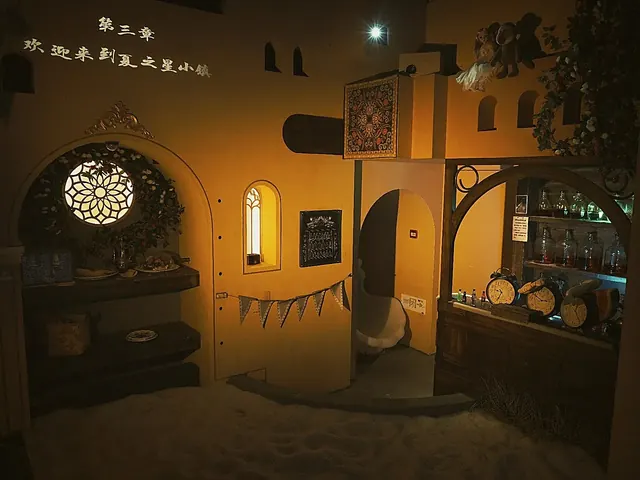
China has one of the largest escape-room scenes in the world, and the productions are not what the name suggests. Expect multi-room sets, mechanical effects, live actors and 60–120 minute runtimes — closer to theatre you walk through than a locked room with padlocks. Big-city venues increasingly run English editions; the industry's own awards (the EGA Awards) are judged across dozens of categories including set design and mechanical effects.
Our own game, AURORA, runs in Shanghai and Beijing, in English or Chinese (one language per session). It is non-horror: no jump scares, no actor grabs you, no one shouts in your face. Sessions run through the day, so it fits a spare slot rather than an entire evening. Check open dates and times.
2. Contemporary art districts
798 Art District in Beijing is a converted electronics factory complex — galleries, murals, courtyards, coffee. In Shanghai, the West Bund puts museums along the river, and M50 is the older, denser art complex. All three are walkable, mostly free or cheap, and the best rainy-day plan in either city.
3. Coffee streets
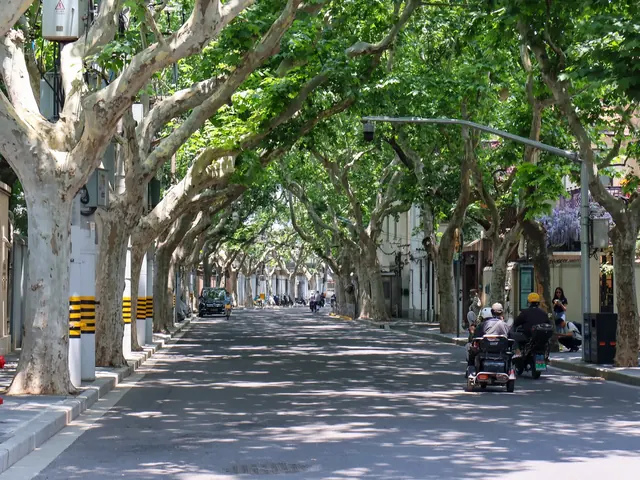
Shanghai is widely reported to have more coffee shops than any other city in the world, and it shows at street level: small independent roasters, six seats, good espresso. The lanes around Wukang Road and Anfu Road are the classic walk — plane trees, old villas, boutiques, and a great deal of very well-dressed people walking small dogs.
4. Live music, jazz and comedy
Both cities have "live houses" — small standing venues with bands most nights of the week. Shanghai has a real jazz lineage, and English-language stand-up nights run in both cities on certain weeknights. These listings move constantly; search in Chinese, or ask your hotel which night is on this week.
5. Neon, bar streets and late-night eating
Sanlitun in Beijing is the classic expat-and-everyone-else night district. In Shanghai, the streets just off the Bund fill up after dark. Neither needs a plan — walk, pick somewhere with people in it, eat late. Street food is everywhere and the metro runs until roughly 11pm, so a night out does not require a taxi budget.
6. Designer toys and pop-culture retail
Blind boxes, designer figures and collectible toys are a genuinely mainstream adult hobby here, not a niche. Pop Mart stores are the famous ones, but the interesting shops are the small independents inside the big malls. Shopping malls in these cities are destinations in themselves — several are the size of a small town and stay open late.
Two half-days that actually work
Shanghai, rainy afternoon into evening
- West Bund museums — three or four hours, entirely under a roof.
- Coffee on Anfu Road — walk the lanes, no reservation needed.
- An immersive game or a live house in the evening — this is the part you need to book ahead. See which sessions are open →
Beijing, morning into night
- 798 Art District — arrive late morning, galleries open around 10am.
- Lunch inside the complex, then a taxi across town.
- Sanlitun for dinner, drinks and the neon part of the evening.
Practical notes
- Set up Alipay before you land. Cash is now the awkward option, not the reliable one. Link an international card at home; a small fee applies to foreign cards.
- Google Maps does not work reliably here. Use Apple Maps or Amap (the Chinese app with an English setting). Screenshot directions before you leave Wi-Fi.
- Book evening things in advance. Weekend sessions and popular shows sell out; walk-ins work for galleries and coffee, almost never for performances.
- English is workable in these districts and thin outside them. A translation app on your phone solves most of the rest.
- Didi is the local ride-hailing app and is cheaper than hailing a taxi on the street.
Want something new you can fit into a spare slot in your day? AURORA is our cinematic, step-inside escape theatre in Shanghai and Beijing — a sword, a sleeping dragon, and a seal that is yours to break, in full English or full Chinese, no horror. Sessions run right through the day: 100 minutes in Beijing, 115 in Shanghai. No deposit online — you reserve now and pay when you arrive in China.
More from this series — Shanghai with international friends: A longer, neighbourhood-by-neighbourhood companion for hosting foreign friends, colleagues and in-laws: the Bund and Yu Garden, the propaganda-poster museum and hidden arcades only expats seem to know, water towns, Suzhou, Anji, and where to eat.
Written by Mr. Jawn & Mrs. Jawn, a two-person immersive game studio working in Shanghai and Beijing. Venue hours and line-ups change often — check before you travel.